
Contracts
Freelance Contract Checklist: 12 Things to Check Before You Sign
By Aetisam · · 5 min read
The short answerBefore you sign a freelance contract, check twelve things: who the parties are, the scope of work, deliverables, timeline, payment terms, deposit, revisions, cancellation terms, ownership of the work, confidentiality, how changes are handled, and who signs. This is general information, not legal advice.
Most freelancers sign contracts the way most people accept cookie banners: quickly, hopefully, and without reading. Then a client asks for a fifth round of changes, or pays 90 days late, and the contract turns out to say nothing about it. A contract is not there to scare anyone. It is there so both sides remember the same deal.
What should a freelance contract include?
Work through these twelve points. If a contract is missing one, ask for it to be added before you start.
- Parties: the legal names of you and the client, with contact details
- Scope of work: what you will do, in specific terms
- Deliverables: the actual files or outcomes you hand over
- Timeline: start date, milestones, and the final deadline
- Payment terms: the rate or fee, when invoices are due, and how you are paid
- Deposit: an amount paid before work starts, if the project warrants it
- Revisions: how many rounds are included, and the price of extra ones
- Cancellation: what happens to payment if either side stops the project
- Ownership: when the rights to the work pass to the client, often after final payment
- Confidentiality: what each side must keep private
- Changes: how new requests are priced and approved in writing
- Signatures: both sides sign and date it
Why do scope and revisions matter most?
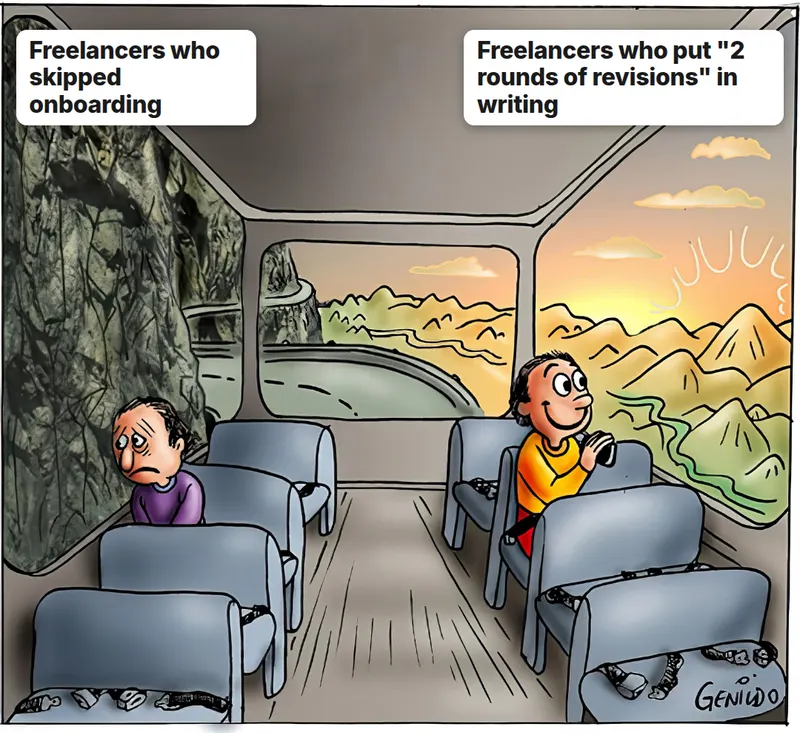
Almost every freelancer horror story starts with vague scope. "Design a website" can mean 3 pages or 30. Write the deliverables in plain terms and list what is not included. If you do not have a scope document yet, our scope of work template is a good starting point. Then cap the revisions. Two rounds included, extra rounds at an hourly rate, is a common and fair setup.
What payment terms protect you?
Cash flow kills more freelance businesses than bad work does. Look for three things: a due date (such as 14 or 30 days from the invoice), a deposit or milestone payments for bigger projects, and a clear consequence for paying late. Be careful with long payment periods. A 60 or 90 day wait can mean you fund your client for months. For what to do when an invoice goes late anyway, see our unpaid invoice email templates.
- Step 1Before work startsDeposit invoice paid, contract signed
- Step 2At the midpointMilestone invoice for work delivered so far
- Step 3On deliveryFinal invoice, due within the agreed days
- Step 4After the due dateReminder, then follow-up, as set in the contract
What are the red flags?
Sources on freelancing agree on a few warning signs. A client who flatly refuses to sign anything is one. Pushing back on a deposit, asking for free "test" work, or tying your pay to results you do not control (like sales) are others. A client asking for small changes to a contract is normal. A client who will not put anything in writing is telling you something.
| Ask first | Looks fair |
|---|---|
| No end date or no way to cancel | Clear deliverables and dates |
| Your pay depends on outcomes you cannot control | Deposit or milestone payments |
| Unlimited revisions | A set number of revisions |
| You give up all rights before you are paid | Rights pass to the client after final payment |
What if the client sends their own contract?
Many larger clients will. That is fine, and you can still read it with the same checklist. Do not assume the wording is fixed. Most clients expect a few changes.
- 1Read all of itIncluding the parts at the end about payment, ownership, and ending the agreement.
- 2Mark what is missingCompare against the 12 points above and list the gaps.
- 3Mark what worries youUnlimited revisions, long payment periods, or rights you give away before being paid.
- 4Ask for changes in writingShort and polite, one change per line, with your reason.
- 5Get advice on the big onesFor high-value or unusual terms, a lawyer is cheaper than a dispute.
Hi [Name],
Thanks for sending the agreement. I would like to sign, with two small changes:
1. Payment: invoices due within [14 or 30] days, instead of [their term].
2. Revisions: [two] rounds included, extra rounds billed at [rate].
Happy to talk through either one. Once we agree, I can sign and we can set a start date.
Thanks,
[Your name]
Do not forget the start of the project
A signed contract is step one. The next problem is usually collecting what you need to begin. A simple onboarding flow after signing keeps the first week calm. See our client onboarding process, or use the Client Onboarding Planner for checklists and intake questions you can reuse.
Questions people ask
A written agreement is still a good idea, even a short one. Some places also have rules about written contracts for freelance work, so check the rules where you and your client are based.
A kill fee is a payment you receive if the client cancels the project after you have started. It covers the work you have already done and the time you set aside.
For larger projects, many freelancers ask for a deposit or milestone payments. It reduces the risk of doing a lot of work before any money arrives.
Yes, as a starting point. Adjust it to your project and your country, and have a lawyer review it if the project is large or the terms are unusual.